
|
Detail |
Information |
|
Date |
Jyeshtha Shukla Paksha Ekadashi |
|
Duration |
One-day planting ritual (seeds are nurtured over the following month) |
|
Observance |
Religious and cultural tradition |
|
Celebrated In |
Across Nepal and Hindu communities in India and worldwide |
|
Observing Communities |
Hindu households, primarily Brahmin, Chhetri, and Vaishnav families |
|
Type of Event |
Sacred agricultural and devotional ritual |
|
Purpose of Event |
To plant Tulasi seeds or sprigs in the home courtyard shrine, marking the beginning of the four-month Chaturmas worship cycle dedicated to Lord Vishnu |
|
Holiday Status |
Not an official public holiday in Nepal (observed alongside Nirjala Ekadashi) |
|
First Observed In |
Ancient Vedic period (documented in the Padma Purana and Brahma Vaivarta Purana) |
Quick Fact: Tulasi Ko Dal Rakhne Din is observed on the very same day as Nirjala Ekadashi, the 11th lunar day of the bright fortnight of Jyeshtha. On this day, Tulasi seeds or small sprigs are planted in sacred soil at home shrines across Nepal. These seedlings are then transplanted to the Tulasi Math (the household Tulasi altar) on Ashadh Shukla Ekadashi (Hari Shayani Ekadashi) a month later, and the Tulasi plant is formally married to Lord Vishnu on Kartik Shukla Ekadashi (Haribodhani Ekadashi), completing a sacred seasonal cycle that has been part of Nepali household life for centuries.
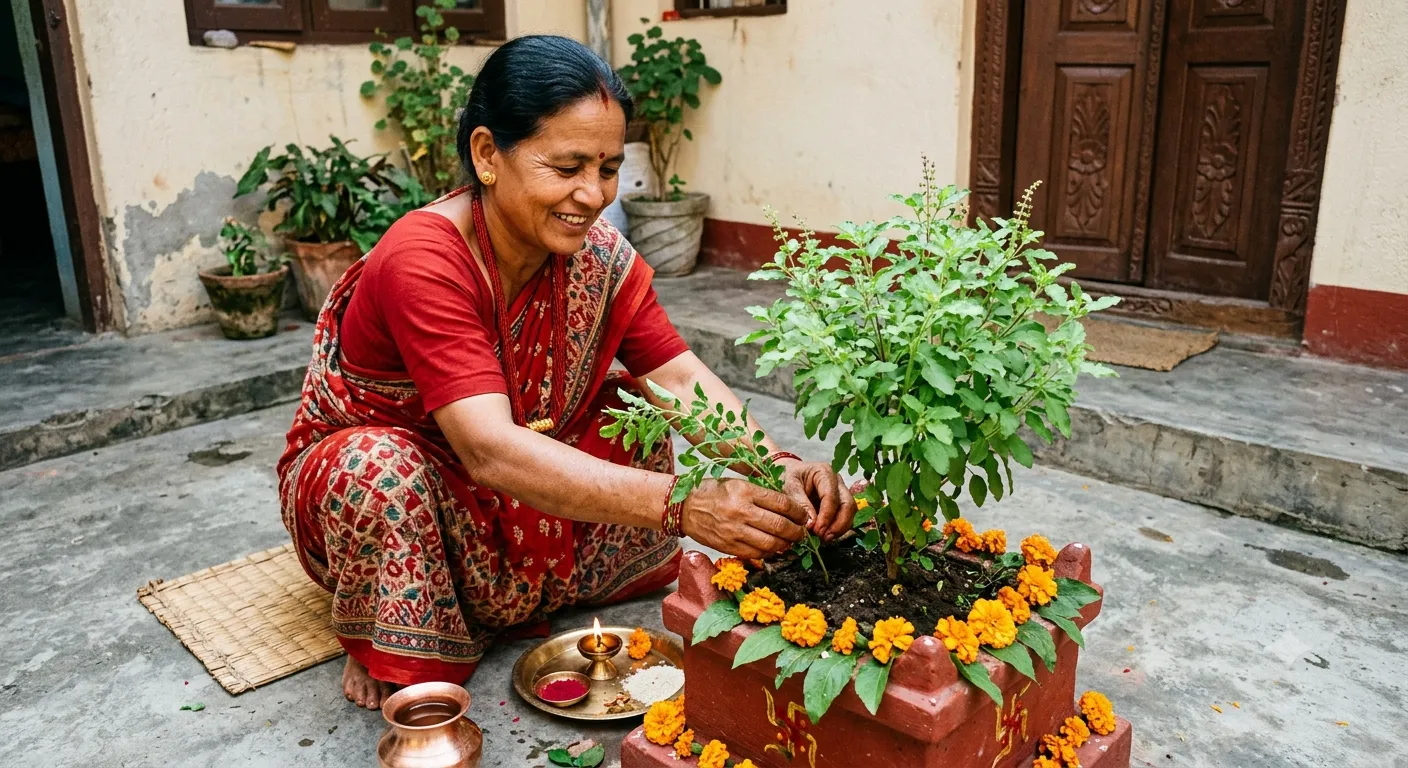
Walk into almost any Hindu household in Nepal, and you will find it, a carefully tended plant on a raised platform near the courtyard entrance, surrounded by tiny diyas, a few drops of water, and the soft fragrance of incense. That plant is Tulasi (holy basil, Ocimum sanctum), and in Nepal, it is far more than a herb. It is a goddess, a healer, and a guardian of the home.
Tulasi Ko Dal Rakhne Din, literally "the day of placing Tulasi sprigs", is the sacred occasion when Hindu families across Nepal plant Tulasi seeds or fresh cuttings into the sacred soil of their home shrines. Observed every year on Jyeshtha Shukla Paksha Ekadashi, this ritual quietly opens one of the most spiritually significant periods in the Nepali Hindu calendar: the four holy months of Chaturmas, during which Lord Vishnu is believed to rest in the cosmic Ocean of Milk. From this single act of planting a tiny green sprig, a whole cycle of devotion begins, one that ends only when Tulasi is ceremonially wedded to Lord Vishnu in the month of Kartik.
According to the Brahma Vaivarta Purana, Tulasi was once Vrinda, a devoted woman whose spiritual purity was broken through divine intervention. Heartbroken, she cursed Lord Vishnu and immolated herself. Moved by her devotion, Vishnu transformed her soul into the Tulasi plant, eternally sacred and forever offered in his worship. The Padma Purana also describes Tulasi as a manifestation of goddess Lakshmi, who emerged from the Samudra Manthan, a living symbol of purity and spiritual liberation.
The tradition of planting Tulasi on Jyeshtha Shukla Ekadashi is tied directly to the Chaturmas cycle. Seeds sown on this day grow through the monsoon months, are transplanted to the Tulasi Math on Hari Shayani Ekadashi in Ashadh, and reach full maturity by Haribodhani Ekadashi in Kartik, when Tulasi is ceremonially married to Lord Vishnu. Over generations, this cycle became a household cornerstone of Nepali Hindu life.
This sacred day serves several deeply meaningful purposes in the life of Nepali Hindu households:
To formally begin the Chaturmas worship cycle, planting Tulasi seeds on this day marks the start of the four-month period, during which Lord Vishnu is believed to be in divine rest, and Tulasi becomes the central object of daily devotion.
To honor the spiritual and mythological identity of Tulasi, devotees plant Tulasi as a goddess, not merely a plant, acknowledging her divine origin as Vrinda and her eternal bond with Lord Vishnu.
To preserve and pass on an ancient ritual, Tulasi Ko Dal Rakhne Din keeps a Vedic tradition alive in everyday household life, connecting each new generation to the religious practices of their ancestors.
To invite divine protection and blessings into the home, Tulasi is believed to purify the home environment, ward off negative energies, and bring the blessings of Lord Vishnu to every family member who cares for the plant.
To recognize Tulasi's Ayurvedic value, ancient sages are said to have formalized this planting tradition after recognizing Tulasi's exceptional healing properties and its ability to release high levels of oxygen, making it as beneficial for physical health as for spiritual life.
The ritual of planting Tulasi on this day follows a method passed down through generations of Nepali households:
Morning purification and worship, households begin the day with early bathing and prayers, approaching the Tulasi planting with clean hands, mind, and intention.
Chanting sacred mantras, before uprooting or planting, devotees recite prayers to Bhagwati Tulasi, including the verse "Prasida mama deveshi kripaya paraya sada" (O Goddess, be gracious to me always with great kindness) and chant Lord Narayan's name: "Om Namo Bhagavate Vasudevaya."
Facing the east, the Tulasi sprig or seedling is planted or uprooted facing the eastern direction, the direction of the rising sun, which is considered auspicious and full of divine energy.
Planting in sacred soil, seeds or sprigs are carefully placed in a clean, sacred spot in the courtyard or on a household shrine platform, with adequate watering immediately after.
Recalling Tulasi's eight sacred names as described in the Tulasi Stotra of the Brahma Vaivarta Purana, devotees honor Tulasi through her eight divine names: Vrinda, Vrindavani, Vishwapujita, Vishwapavani, Pushpasara, Nandini, Tulasi, and Krishnajivani. It is believed that the mere utterance of these names fulfills one's wishes.
Observed alongside Nirjala Ekadashi since Tulasi Ko Dal Rakhne Din falls on the same day as Nirjala Ekadashi, many households combine the Tulasi planting ritual with the Ekadashi fast, creating a full day of spiritual discipline and devotion.
The significance of this day runs far deeper than a simple gardening tradition:
It is the seed of a four-month devotional journey; the Tulasi planted on this day will grow to become the living center of daily worship during Chaturmas, reaching its spiritual peak with the Tulasi Vivah ceremony in Kartik.
It connects household life to the cosmic calendar by aligning the planting of a sacred plant with lunar tithi, seasonal cycles, and Vedic scripture. This tradition reminds families that their daily lives are part of something much larger.
It reinforces the unique status of Tulasi in Nepali Hinduism; no other plant receives the care, the mantras, the named identity, and ultimately the marriage ceremony that Tulasi does. This day marks the beginning of that extraordinary relationship.
It supports health and environmental well-being. Modern science has validated what ancient sages observed: Tulasi releases significant amounts of oxygen, contains antimicrobial properties, and has been shown to reduce cortisol levels and boost immunity. Planting Tulasi in the home is an act of care for both the family and the environment.
It strengthens the living tradition of women's religious participation across Nepal. It is largely women who tend the Tulasi plant, recite the daily prayers, and ensure the rituals are passed to the next generation. Tulasi Ko Dal Rakhne Din honors this quiet, essential form of devotion.
It resists the erosion of cultural memory in an era of rapid urbanization. Maintaining the Tulasi planting tradition is a gentle but powerful way of keeping ancient knowledge alive. Families who plant Tulasi today are making a conscious choice to carry their heritage forward.
Tulasi Ko Dal Rakhne Din is easy to overlook. There is no grand procession, no public holiday, no fireworks. It is simply the act of bending toward the earth, placing a tiny seed or sprig into the soil, and whispering a prayer. But in that quiet gesture lives centuries of faith, botanical wisdom, mythological memory, and devotional love. The Tulasi that grows from that seed will be watered every morning, circled by evening lamps, and one day dressed as a bride. It all begins today, on the day of planting.