
Quick Reference Card
| Date | Bhadra 28, 2083 BS (September 13, 2026) |
| Duration | 1 day (extends into the Teej festival period) |
| Observance | Preparatory feast and cultural celebration |
| Celebrated in | Nepal and Hindu communities in India |
| Observing Communities | Hindu women and their families |
| Type of Event | Cultural celebration and pre-Teej feast |
| Purpose of Event | To prepare women physically and mentally for the rigorous Haritalika Teej fast by gathering for communal feasting, singing, and celebration of feminine solidarity. |
| Holiday Status | Part of the extended Teej public holiday period |
| First Observed in | Pre-modern Nepali tradition |
Quick Fact: Dar Khane Din, literally meaning "the day of eating Dar" (a lentil-based feast), is the celebratory day that precedes Haritalika Teej when women gather to feast together before the solemn fasting period begins. Brothers traditionally host elaborate feasts for their sisters, and the day overflows with traditional foods, songs, and the joy of female community gathering.
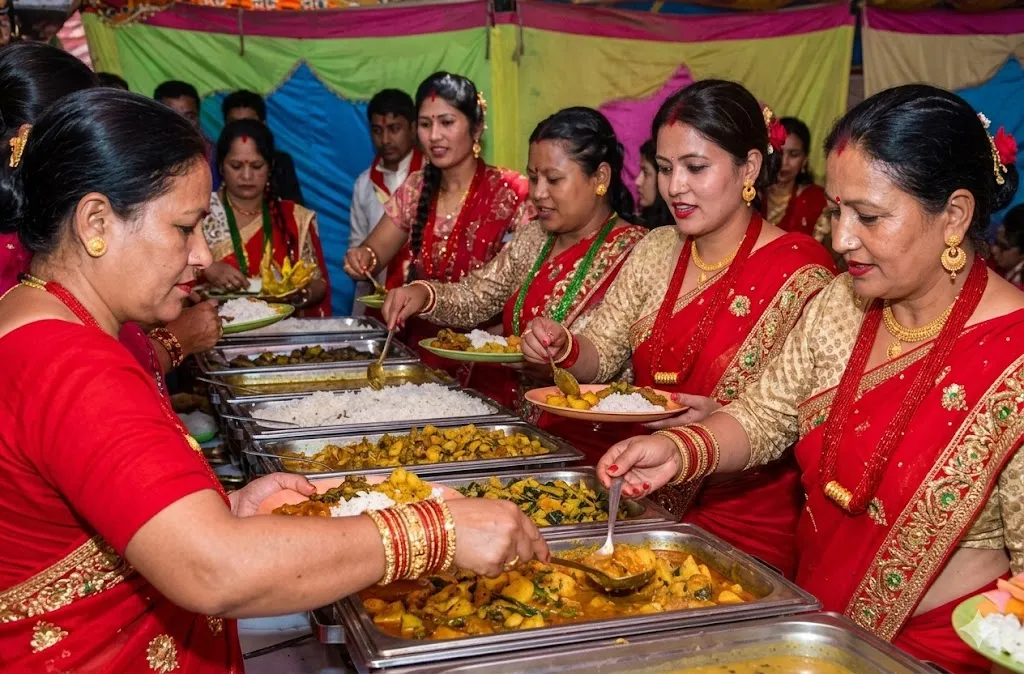
Dar Khane Din is the joyful preparatory celebration that precedes Haritalika Teej, the great women's fast. On this day, women gather in homes and community spaces for elaborate communal feasts, festive singing, and the shared celebration of feminine bonds before the solemn fasting period begins the next day. Dar refers to traditional lentil-based preparations, but the day encompasses a rich variety of festive foods and the vibrant cultural expression of female community solidarity in Nepali tradition.
History and Background
Dar Khane Din has deep cultural roots in Nepali tradition as a natural preparation for the demanding Haritalika Teej fast. The custom of gathering for a communal feast before a period of religious fasting reflects Hindu philosophy's balanced approach to spiritual practice recognizing that joyful celebration and communal bonding are as important as ascetic discipline. Historically, women would travel to their parental homes or gather in community spaces to feast and celebrate before returning to observe the Teej fast. Brothers hosting elaborate feasts for their sisters emerged as a cherished family tradition, strengthening sibling bonds. Over generations, Dar Khane Din has evolved into one of the most anticipated social celebrations in the Nepali calendar.
Purpose of Dar Khane Din
This celebration is observed primarily to:
Prepare women physically and mentally for the rigorous Haritalika Teej fast.
Strengthen sisterhood and female community bonds through collective feasting and merriment.
Celebrate feminine solidarity and mutual support systems in Nepali culture.
Create positive energy and communal joy before the solemn fasting period begins.
How is Dar Khane Din Observed?
Dar Khane Din is marked by abundant food, music, and togetherness:
Communal Feast: Women gather in homes or community spaces for elaborate, specially prepared feasts.
Traditional Foods: Preparation of Sel Roti (fried rice bread), Puri, Kheer (rice pudding), and meat curries.
Sweet Distribution: Sharing of Laddu, Barfi, and other traditional sweets among participants.
Brother-Sister Tradition: Brothers host elaborate feasts for their sisters as a cherished family custom.
Music and Dance: Singing of traditional Teej songs and folk dances throughout the day.
Gift Exchange: Exchange of festive gifts and greetings among women and family members.
Importance of Dar Khane Din
Dar Khane Din carries significant cultural importance:
It represents pre-fast community consolidation, affirming that celebration and devotion are complementary.
It affirms the critical importance of female networks and mutual support in Nepali social life.
It demonstrates Hindu philosophy's emphasis on joyful celebration as a complement to ascetic practice.
It creates economic opportunity for cooks, food vendors, and traditional craftspeople.
It marks a cultural transition point in the annual religious calendar, bridging ordinary life and sacred time.
Conclusion
Dar Khane Din beautifully embodies the Nepali cultural understanding that joy and discipline, celebration and devotion, are inseparable aspects of a whole spiritual life. By gathering together for food, song, and sisterhood before the rigors of Teej fasting, women draw on the strength of community to face their devotional practice with renewed energy and heart. This beloved pre-Teej tradition is as essential to the Teej season as the fast itself.